
Goodbye to Old Driving Licence Rules – Canada is preparing for a major shift in road safety standards as new senior driver requirements take effect from 1 January 2026. These updated rules are designed to reflect an ageing population, rising traffic density, and the need for safer roads nationwide. Canadian authorities aim to balance independence for older drivers with stronger safeguards for public safety. The changes affect licence renewals, medical reporting, and assessment processes, making it essential for seniors and their families to understand what is coming. This article explains the new framework clearly, focusing on how older drivers across Canada may be impacted.
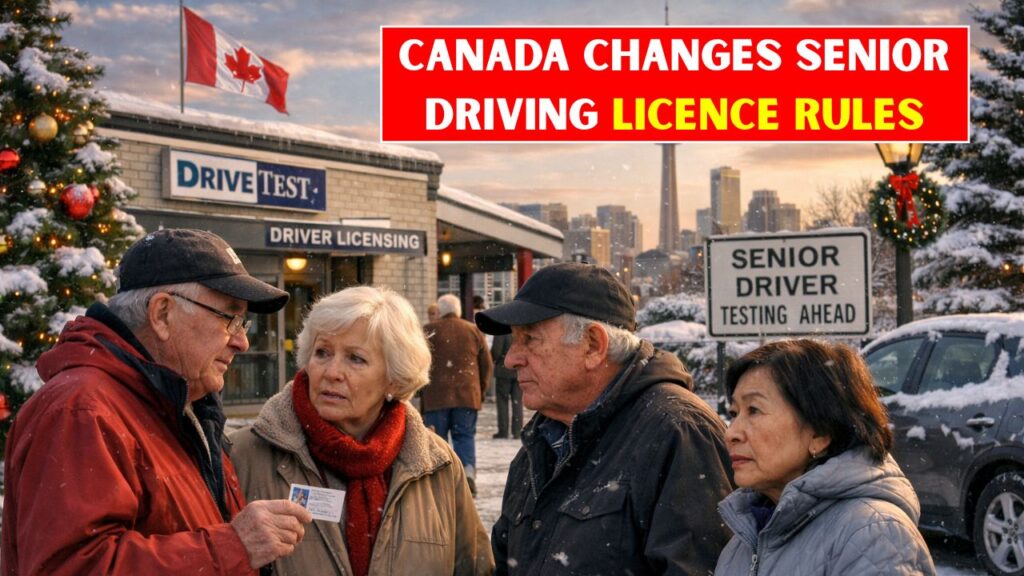
Senior driving licence changes for Canadian seniors in 2026
The upcoming senior driving licence changes introduce a more structured renewal system for Canadian seniors starting in 2026. Under the revised approach, older drivers will face age-based checks that focus on vision, cognitive awareness, and reaction ability rather than automatic licence cancellation. The goal is to identify potential risks early while allowing capable individuals to continue driving safely. Canadian seniors will notice longer processing times, additional documentation, and possible referrals for on-road evaluations depending on age and medical history. Authorities stress that these measures are preventive, not punitive, and are meant to support safer mobility while respecting the independence of older adults who rely on driving for daily activities.
New senior driver medical rules across Canada from January 2026
From January 2026, new senior driver medical rules across Canada will place greater responsibility on health disclosures during licence renewals. Older motorists may be required to submit periodic medical certificates confirming vision clarity, neurological stability, and overall fitness to drive. In some cases, family doctors or specialists may be asked to provide supporting assessments. These checks are intended to reduce accidents linked to untreated medical conditions while encouraging early treatment and monitoring. Across Canada, transport authorities emphasise consistency and fairness, ensuring that medical reviews are proportionate to risk rather than based solely on age, helping seniors maintain confidence and clarity about their driving status.

| Requirement | Details from 2026 |
|---|---|
| Starting age | Enhanced checks begin at 70+ |
| Medical certificate | Required at set renewal intervals |
| Vision assessment | Mandatory during renewal |
| Road test | Only if flagged by assessment |
| Licence validity | Shorter renewal cycles for older drivers |
Canada’s 2026 senior licence renewal process and testing updates
Canada’s 2026 senior licence renewal process introduces clearer steps and more transparency for older motorists. Instead of sudden suspensions, drivers may be guided through graduated assessments if concerns arise. This could include refresher courses, conditional licences, or limited driving permissions such as daytime-only driving. For many Canadians, these options provide reassurance that mobility will not be lost abruptly. Provincial transport departments are also expanding digital reminders and support resources to help seniors prepare well in advance. The updated renewal process reflects a broader shift toward supportive regulation, ensuring safety while recognising the vital role driving plays in social participation and independence.
How older Canadians can prepare for new senior driver requirements
Older Canadians can prepare for the new senior driver requirements by planning ahead and staying informed. Regular eye tests, routine medical check-ups, and honest discussions with healthcare providers can prevent last-minute complications. Many provinces also encourage voluntary driving assessments or refresher courses, which can boost confidence and demonstrate readiness during renewals. Families are advised to discuss transportation alternatives early, ensuring smooth transitions if driving limits are introduced. Across Canada, preparation is key, as proactive steps help seniors retain control over their mobility while aligning with updated safety expectations set to begin in 2026.
Frequently Asked Questions (FAQs)
1. When do the new senior driving rules start in Canada?
The updated senior driver requirements take effect nationwide from 1 January 2026.
2. Will all senior drivers need to take a road test?
No, road tests are only required if assessments or medical reviews indicate potential risk.
3. At what age do enhanced checks usually begin?
Enhanced monitoring generally starts from age 70, depending on provincial rules.
4. Can seniors still drive if they have medical conditions?
Yes, many seniors can continue driving if conditions are managed and medically cleared.