
New Canadian Traffic Rules – Canada is implementing significant changes to its traffic regulations starting 6 January 2026, introducing stricter rules and heavier penalties for violations. These new measures aim to enhance road safety across the country, targeting both urban and rural areas. Canadian drivers will need to familiarize themselves with these updates, as fines for common infractions can now reach up to $1,000. Authorities are emphasizing compliance to reduce accidents and ensure safer roads for all residents, including pedestrians and cyclists. Understanding the details of these new traffic rules is crucial for every motorist in Canada.
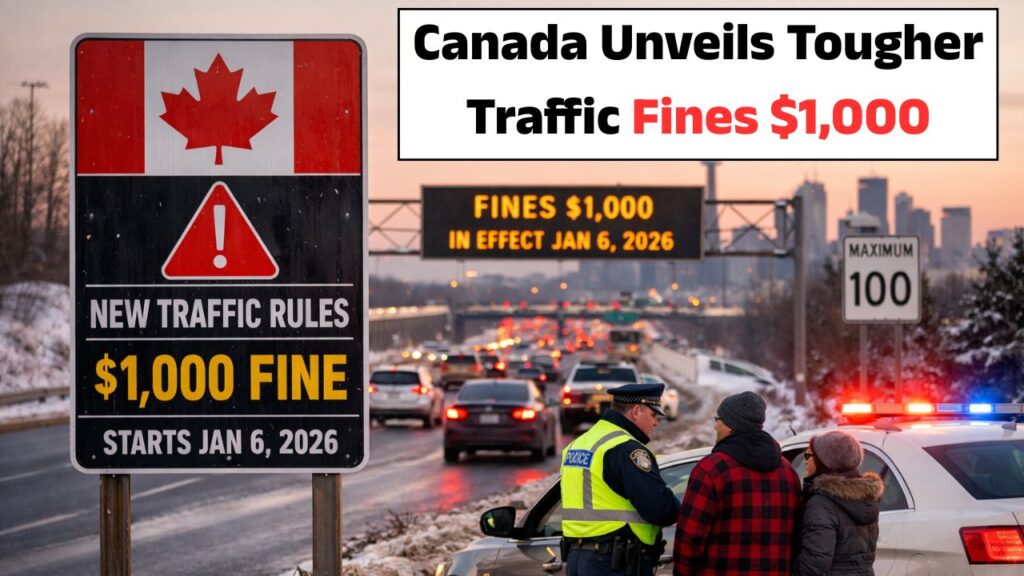
New Traffic Rules for Canadian Drivers
Canadian drivers will face a series of new traffic regulations designed to curb unsafe driving behaviors. Among the most notable changes are increased fines for speeding, illegal parking, and distracted driving. Motorists caught violating these rules may be required to pay penalties of up to $1,000, depending on the severity of the infraction. The government has also introduced more rigorous enforcement measures, including enhanced police patrols and the use of automated cameras. These rules reflect Canada’s commitment to reducing road accidents and protecting all road users, particularly in high-risk zones such as school areas and highways.
Updated Canadian Traffic Fines and Penalties
The Canadian government has revised its fine structure for traffic offenses to ensure compliance and deter repeat violations. Speeding fines now start higher, while repeat offenders may face doubled penalties. Distracted driving, which includes texting or using handheld devices while driving, can attract fines of up to $1,000 and additional demerit points. Parking violations, especially in restricted or emergency areas, are also subject to steeper charges. These updates aim to encourage responsible driving and minimize hazards on Canadian roads, benefiting both drivers and pedestrians across the country.

| Infraction | Fine Amount | Additional Penalties |
|---|---|---|
| Speeding (First Offense) | $200–$400 | 2–3 demerit points |
| Distracted Driving | $500–$1,000 | 3–4 demerit points |
| Illegal Parking | $150–$300 | Possible towing |
| Driving Without Seatbelt | $200 | 2 demerit points |
| Reckless Driving | $800–$1,000 | 6–8 demerit points, license suspension |
Canadian Motorists Must Adapt to Stricter Rules
With these changes, Canadian motorists are required to adjust their driving habits to avoid costly fines and penalties. Authorities recommend reviewing the official traffic regulations regularly, attending defensive driving courses, and staying vigilant while on the road. Road safety campaigns will be launched nationwide to educate drivers about the new measures, particularly emphasizing high-risk areas and behaviors. Compliance is not only mandatory but essential to prevent accidents and ensure a safer travel environment for all Canadians, including both private vehicle owners and commercial drivers.
Road Safety Measures Across Canada
The Canadian government continues to prioritize road safety with targeted strategies to reduce accidents. Enhanced monitoring through traffic cameras, increased police checkpoints, and stricter enforcement of speed limits are part of the new safety measures. Public awareness campaigns are also being rolled out to inform Canadians about the penalties and responsibilities associated with the new rules. By adhering to these regulations, drivers contribute to a safer transportation system, protecting themselves and others on Canadian roads.
Frequently Asked Questions (FAQs)
 Canada Confirms $2,200 Senior Bonus Payment From 6 January 2026 — Eligibility and Deposit Details
1. When do the new Canadian traffic rules take effect?
The new traffic rules are effective from 6 January 2026.
2. What is the maximum fine for distracted driving in Canada?
The maximum fine for distracted driving is $1,000, along with additional demerit points.
3. Are parking violations affected by the new rules?
Yes, parking fines have increased, particularly in restricted or emergency zones.
4. How can Canadian drivers stay updated on these regulations?
Drivers can check official government websites, attend road safety campaigns, and review updated traffic laws regularly.