
Canadian Drivers New Rules – Canadian drivers are facing a major shake-up starting 10 January 2026 as new rules introduce fines of up to $1,000 for traffic violations. The changes, aimed at improving road safety and reducing reckless driving, will affect motorists across Canada, from urban centres to rural highways. Authorities have highlighted that these measures will target speeding, distracted driving, and other high-risk behaviours, marking one of the strictest updates in recent years. For Canadians who regularly commute or travel by car, understanding these new regulations is essential to avoid steep penalties and maintain safe driving habits on the road.
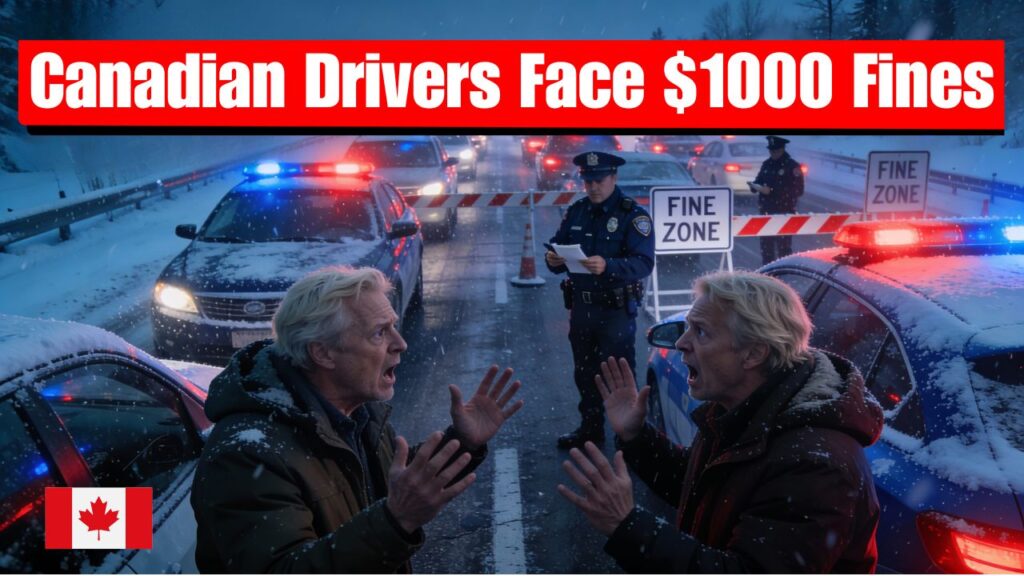
Driving Fines Update for Canadian Motorists
Canadian motorists should prepare for stricter enforcement under the new $1,000 fine rules, which target key traffic violations such as speeding, running red lights, and mobile phone use while driving. The government has emphasized that these penalties are designed to enhance safety for all road users, including pedestrians and cyclists. Drivers across Canada are advised to familiarize themselves with the updated fine structures, as even minor infractions could lead to significant financial consequences. Law enforcement agencies will be actively monitoring compliance to ensure the new rules are applied fairly and consistently nationwide.
New $1,000 Driving Penalties Across Canada
Across Canada, the introduction of $1,000 fines reflects a strong commitment to reducing traffic-related injuries and fatalities. These penalties are part of a broader strategy by Canadian authorities to curb unsafe driving behaviours, including impaired driving and aggressive lane changes. Citizens are encouraged to review the specific offences covered under the new regulations, as fines will vary depending on the severity of the violation. Educational campaigns will accompany enforcement to ensure that drivers understand both the financial and safety implications of breaking the rules.

| Offence | Previous Fine | New Fine | Effective Date |
|---|---|---|---|
| Speeding 20+ km/h over limit | $200 | $1,000 | 10 Jan 2026 |
| Running Red Light | $150 | $1,000 | 10 Jan 2026 |
| Distracted Driving (phone use) | $100 | $1,000 | 10 Jan 2026 |
| Failing to Yield to Pedestrian | $120 | $1,000 | 10 Jan 2026 |
| Impaired Driving | $500 | $1,000 | 10 Jan 2026 |
Canadian Drivers’ Responsibilities Under New Rules
With the new $1,000 fine system, Canadian drivers are expected to take extra precautions on the road. The updated regulations not only penalize dangerous driving behaviours but also encourage adherence to speed limits, seatbelt use, and safe vehicle operation. Road safety advocates highlight that consistent compliance will prevent accidents and reduce the financial burden of penalties. Additionally, insurance companies may adjust premiums based on adherence to these stricter rules, making it crucial for drivers to maintain clean records under the new legislation.
Traffic Safety Compliance for Canadians
Traffic safety compliance is now more critical than ever for Canadians. Authorities are using a combination of increased patrols, automated camera enforcement, and public awareness campaigns to ensure drivers understand the consequences of unsafe behaviours. Individuals are encouraged to update themselves on provincial variations, as some regions may impose additional measures alongside the nationwide $1,000 fines. Ultimately, these rules are designed to create a culture of responsible driving and reduce preventable injuries across Canada’s roadways.
Frequently Asked Questions (FAQs)

1. When do the new $1,000 fines start in Canada?
The fines come into effect on 10 January 2026 for all applicable traffic violations nationwide.
2. Which traffic offences are subject to the new $1,000 fines?
Offences include speeding over 20 km/h, running red lights, distracted driving, failing to yield to pedestrians, and impaired driving.
3. Will all provinces in Canada enforce these fines the same way?
Yes, the $1,000 fines are a nationwide update, though some provinces may add supplementary measures or enforcement strategies.
4. How can Canadian drivers avoid these fines?
Drivers should follow traffic laws, avoid distractions, and maintain awareness of speed limits and pedestrian crossings to stay compliant.