
Goodbye to Old Traffic Fines – Canada is preparing for a major shift in road safety enforcement as new traffic regulations take effect nationwide from 1 January 2026. These changes mark the end of several outdated traffic fine structures and introduce stricter driving penalties aimed at reducing accidents, repeat offences, and dangerous behaviour on public roads. Canadian drivers will face higher fines, tougher licence consequences, and clearer enforcement rules, especially for speeding, impaired driving, and distracted driving. The updated framework reflects Canada’s growing focus on public safety, modern traffic risks, and consistent penalties across provinces.
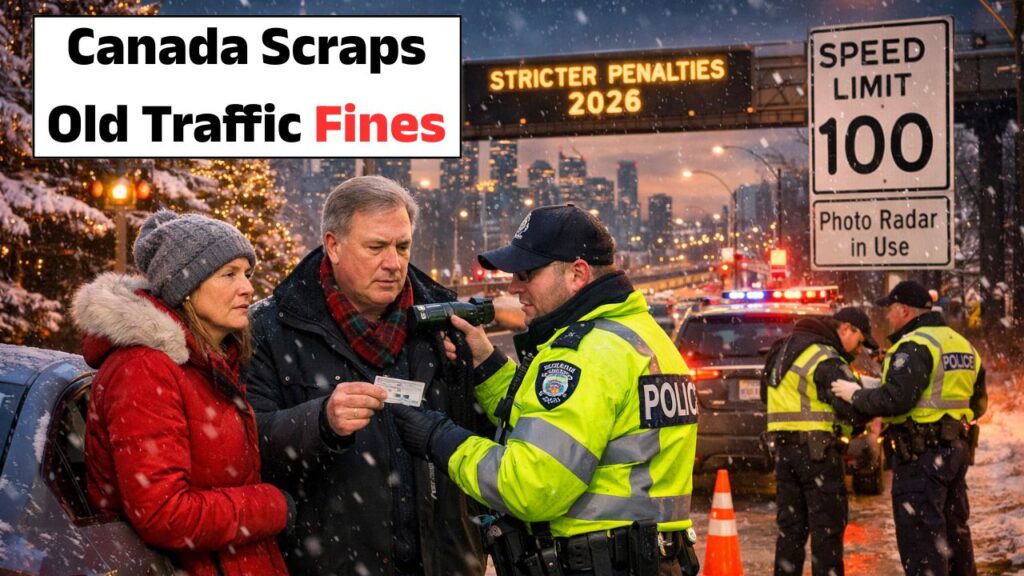
Stricter driving penalties for Canadian drivers starting January 2026
From the start of 2026, stricter driving penalties for Canadian drivers will replace many existing traffic fine rules that critics say no longer deter risky behaviour. The federal and provincial authorities are aligning penalties to ensure that serious offences carry meaningful consequences, including higher monetary fines and longer licence suspensions. Speeding in school zones, repeated mobile phone use while driving, and aggressive driving will attract sharper penalties than before. For drivers across Canada, the focus is shifting from minor warnings to firm deterrence. Officials believe these changes will encourage safer habits while ensuring enforcement remains fair, transparent, and consistent nationwide.
New traffic fine rules affecting motorists across Canada
The new traffic fine rules affecting motorists across Canada introduce clearer offence categories and updated penalty ranges. Instead of one-size-fits-all fines, penalties will increasingly reflect the severity and frequency of violations. Repeat offenders will face escalating fines, mandatory driving courses, or extended suspensions. Canadian motorists should also expect improved digital tracking of offences, allowing authorities to identify patterns of unsafe driving more efficiently. These reforms aim to reduce confusion, close loopholes, and ensure that traffic laws evolve alongside modern driving conditions, including higher traffic volumes and increased reliance on in-car technology.

| Violation Type | Old Penalty Range | New Penalty From 2026 |
|---|---|---|
| Speeding in school zones | $120 – $300 | $300 – $1,000 |
| Distracted driving | $250 – $500 | $500 – $1,500 |
| Repeat traffic offences | Minor fine increases | Escalating fines and suspension |
| Dangerous driving | Licence points | Higher fines plus suspension |
Updated road safety enforcement under Canada’s 2026 traffic laws
Updated road safety enforcement under Canada’s 2026 traffic laws places stronger emphasis on prevention rather than punishment alone. Authorities across the country will increase roadside checks, expand automated enforcement zones, and standardise penalties between regions. Canadian residents are encouraged to familiarise themselves with new fine thresholds and licence consequences to avoid unexpected penalties. The government believes consistent enforcement will reduce repeat violations and improve public trust. By modernising traffic laws, Canada aims to create safer roads while ensuring that penalties remain proportionate, predictable, and clearly communicated to all road users.
How Canadian motorists can prepare for stricter traffic penalties
Canadian motorists can prepare for stricter traffic penalties by staying informed and adjusting driving habits before the new rules begin. Drivers should review updated provincial guidelines, pay close attention to speed limits, and minimise distractions behind the wheel. Across Canadian provinces, educational campaigns will highlight common offences and their new penalties, helping drivers understand expectations. Preparing early not only reduces the risk of fines but also contributes to safer roads for everyone. Responsible driving will become even more important as enforcement becomes more precise and penalties increase.
Frequently Asked Questions (FAQs)
 Goodbye to Easy Licence Renewals: New Driving Tests for Seniors Begin in Canada on 1 January 2026
1. When do the new traffic penalties start in Canada?
The stricter driving penalties take effect nationwide from 1 January 2026.
2. Will all provinces follow the same traffic fine structure?
Provinces will align penalties closely, though minor regional variations may still apply.
3. Are fines increasing for first-time offenders?
Yes, many first-time offences will carry higher base fines than under previous rules.
4. Do the new rules include licence suspensions?
Yes, repeat and serious offences may result in longer or mandatory licence suspensions.