
Goodbye to Small Carbon Rebates – From 1 January 2026, Canada’s approach to climate rebates is set to change, marking a clear shift away from smaller, incremental carbon payments. The updated system is designed to provide higher and more meaningful climate payments that better reflect rising living costs and environmental commitments. For households across Canada, this transition signals both financial relief and a renewed focus on encouraging greener choices. As climate policies evolve, understanding how these higher payments work, who qualifies, and when funds are issued will help Canadians plan ahead and make informed decisions.
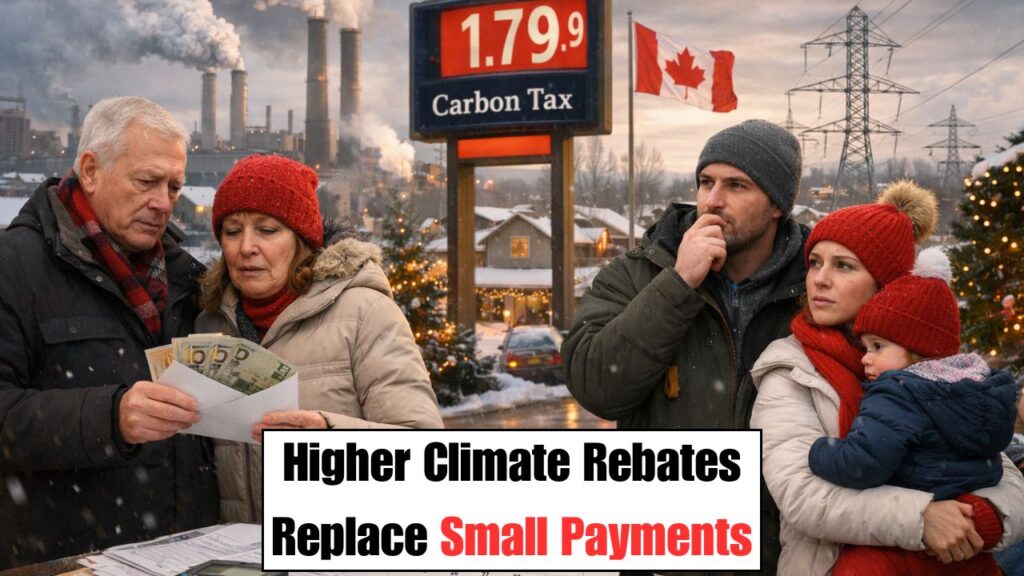
Higher Climate Payments Replacing Small Carbon Rebates for Canadians
The move toward higher climate payments means Canadians will no longer see modest carbon rebates that offered limited relief. Instead, the revised structure focuses on fewer but more substantial payments that align with national climate goals. These payments are intended to offset the cost impact of carbon pricing while still encouraging lower emissions. For Canadian citizens, this change also improves transparency, as households can better anticipate the amount and timing of support. By consolidating rebates into higher payouts, the federal approach aims to balance environmental responsibility with practical household budgeting needs.
Canada’s Carbon Pricing Shift and Bigger Climate Rebates in 2026
Across Canada, carbon pricing remains a central tool in reducing emissions, but the rebate mechanism is being refined. Starting in 2026, higher climate rebates are expected to better match the real costs families face due to carbon pricing. The Canadian government has positioned these enhanced payments as a way to maintain public support for climate action while easing financial pressure. For many households, especially those with lower or middle incomes, larger rebates may offer clearer benefits than smaller, more frequent amounts that were harder to track or rely on.

| Aspect | Details for 2026 |
|---|---|
| Start Date | 1 January 2026 |
| Payment Size | Higher consolidated climate payments |
| Eligibility | Most Canadian households under carbon pricing system |
| Payment Frequency | Periodic, fewer but larger payments |
What the End of Small Carbon Rebates Means Across Canada
The end of small carbon rebates represents a policy reset rather than a reduction in support. Across Canada, households may find it easier to notice and use larger payments that arrive less often. This approach is expected to improve awareness of climate compensation and reinforce the link between carbon pricing and household benefits. For residents in provinces under the federal system, the change could also simplify tax-time calculations, as rebates are more clearly defined. Overall, the focus is on delivering support that feels tangible while maintaining climate incentives.
Climate Incentives and Household Impact for Canadian Residents
For Canadian residents, higher climate payments can influence everyday decisions, from transportation choices to home energy use. When rebates are substantial and predictable, households may feel more confident investing in energy-efficient options. The updated system also helps reinforce the message that climate action and affordability can coexist. By redistributing carbon pricing revenue in a clearer way, Canada aims to protect purchasing power while still advancing emission reduction targets. This balance is crucial as climate policies expand in scope and long-term impact.
Frequently Asked Questions (FAQs)

1. When do higher climate payments start in Canada?
They are expected to begin from 1 January 2026.
2. Are small carbon rebates completely ending?
Yes, they are being replaced by fewer but higher climate payments.
3. Who is eligible for the new climate payments?
Most households covered under Canada’s carbon pricing system qualify.
4. Will higher payments affect climate goals?
No, they are designed to support households while maintaining emission reduction incentives.